Best Psychological Thrillers That Will Blow Your Mind
Psychological thrillers are among the most exciting movie genres in the world. These films create tension, fear, suspense, and confusion. Unlike regular action movies, psychological thrillers focus on the human mind. They explore trauma, obsession, identity, paranoia, manipulation, and mental breakdown.
Many psychological thrillers include shocking twists that completely change the story. As a result, viewers stay engaged from beginning to end. Some movies even force audiences to watch them multiple times to fully understand the hidden meaning.
Today, psychological thrillers dominate streaming platforms and movie discussions online. Fans love discussing theories, hidden clues, and mysterious endings. Therefore, these movies continue gaining popularity every year.
If you enjoy suspenseful stories, disturbing mysteries, and intelligent storytelling, this guide to the best psychological thrillers is perfect for you.
Why Psychological Thrillers Are So Popular
Psychological thrillers create emotional tension instead of relying only on action scenes. These movies make viewers question reality and human behavior. Moreover, they often explore deep emotions and dark secrets.
Many people love psychological thrillers because the stories feel unpredictable. The audience never knows who to trust. Furthermore, the main characters often struggle with fear, guilt, trauma, or mental illness.
Modern audiences also enjoy analyzing psychological thrillers online. Social media platforms are filled with fan theories and ending explanations. Consequently, these movies generate strong engagement and long-term popularity.
Another reason psychological thrillers succeed is replay value. Fans often discover hidden details during a second viewing.
Fight Club
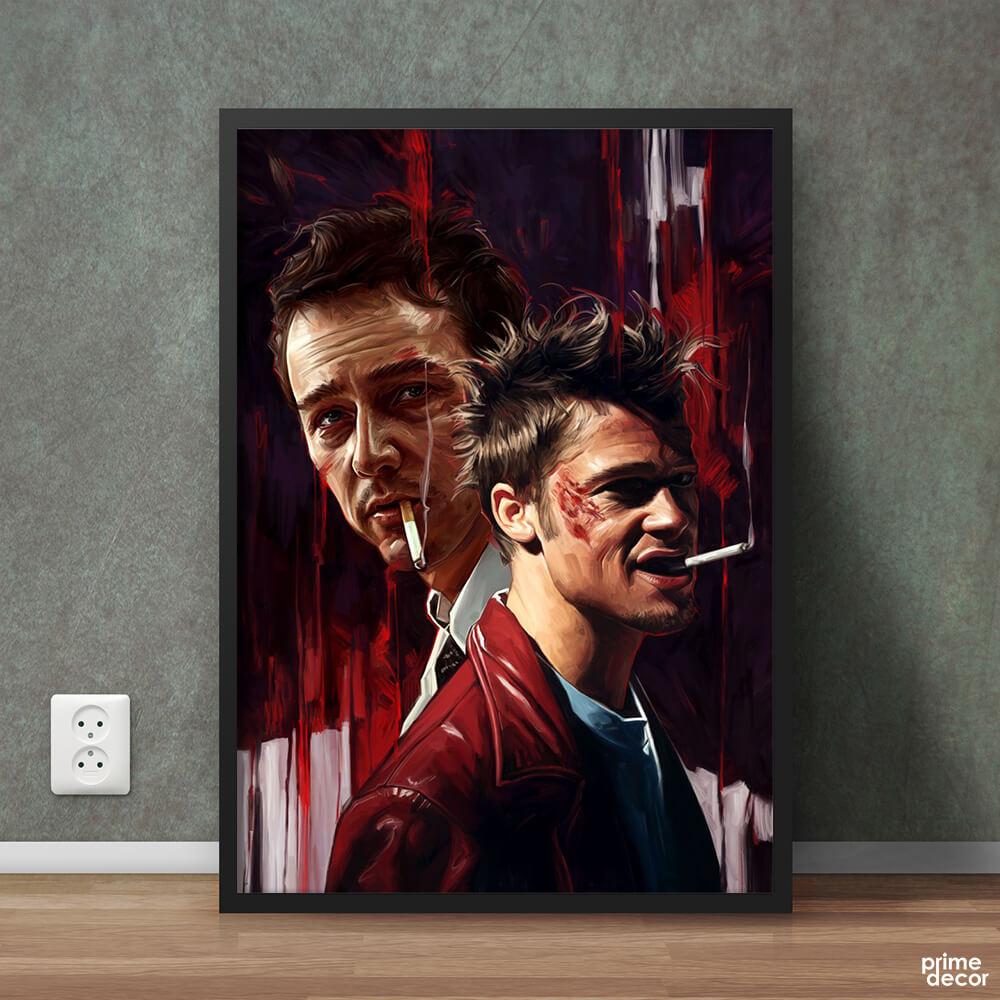
Fight Club is a 1999 American psychological drama film directed by David Fincher and based on the 1996 novel by Chuck Palahniuk. It explores themes of consumerism, identity, and masculinity through the story of an insomniac office worker who forms an underground fight club with a charismatic soap salesman. The film gained cult status and remains a landmark in modern cinema.
Key facts
- Director: David Fincher
- Release year: 1999
- Based on novel by: Chuck Palahniuk
- Starring: Edward Norton, Brad Pitt, Helena Bonham Carter
- Production company: 20th Century Fox
Plot and themes
Fight Club follows an unnamed narrator (Edward Norton) who struggles with insomnia and disillusionment in corporate life. He befriends Tyler Durden (Brad Pitt), a magnetic anarchist who introduces him to a brutal underground club as a form of male bonding and rebellion. As the club grows into the violent movement “Project Mayhem,” the narrator’s grip on reality unravels, leading to revelations about identity and control. The film critiques materialism and explores the psychological costs of modern alienation.
Production and style
Fincher’s direction combines dark humor, visceral violence, and stylized cinematography. The visual design uses desaturated colors, gritty textures, and inventive digital effects. Cinematographer Jeff Cronenweth and screenwriter Jim Uhls helped translate Palahniuk’s unreliable-narrator structure to the screen. The soundtrack, composed by the Dust Brothers, reinforces the film’s raw, industrial tone.
Reception and legacy
Initially divisive among critics and underwhelming at the box office, Fight Club found a massive following through DVD releases and online discussion. It is now considered one of Fincher’s defining works and a key film of late-1990s counterculture. Its iconic quotes—such as “The first rule of Fight Club is: you do not talk about Fight Club”—entered popular culture, and the film continues to inspire debate about masculinity, anti-consumerism, and identity.
Shutter Island
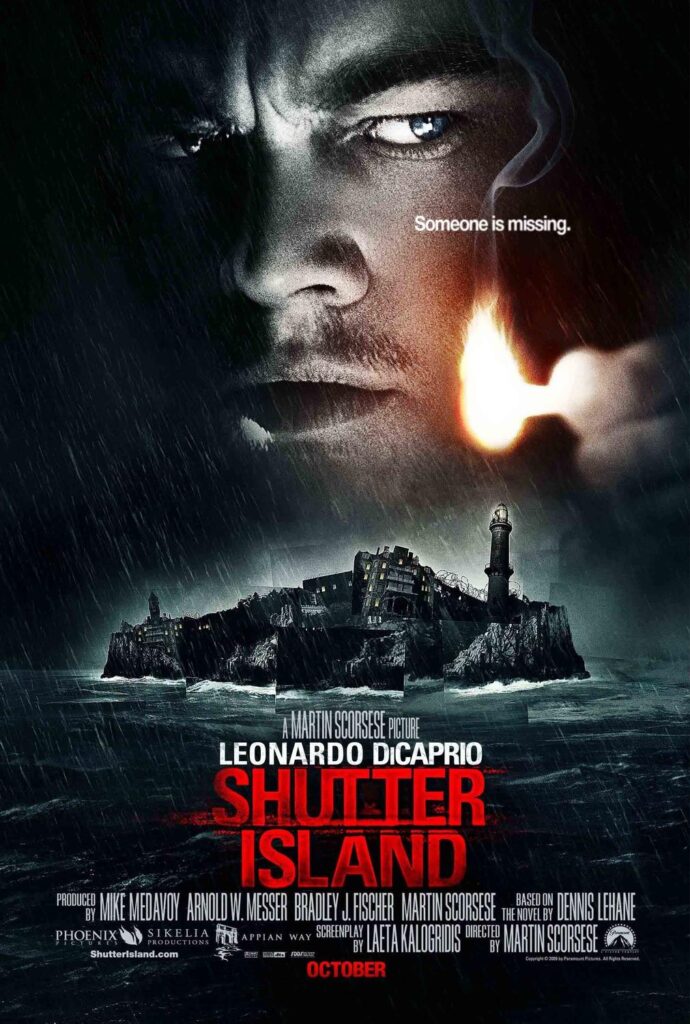
Shutter Island is a 2010 psychological thriller film directed by Martin Scorsese and starring Leonardo DiCaprio. Adapted from Shutter Island (2003), it blends noir suspense with psychological horror, following U.S. Marshal Teddy Daniels as he investigates a disappearance at a remote mental institution. The film is acclaimed for its atmosphere, performances, and twist ending.
Key facts
- Release year: 2010
- Director: Martin Scorsese
- Based on novel by: Dennis Lehane
- Main cast: Leonardo DiCaprio, Mark Ruffalo, Ben Kingsley, Michelle Williams
- Box office: Over $295 million worldwide
Plot and Themes
Set in 1954, the film follows Teddy Daniels (DiCaprio) and his partner Chuck Aule (Ruffalo) as they arrive at Ashecliffe Hospital on Shutter Island to locate a missing patient. As the investigation deepens, Teddy confronts disturbing visions and the possibility of a vast conspiracy. The narrative explores guilt, trauma, and the fragility of sanity, culminating in an ambiguous revelation about Teddy’s identity and reality.
Production and Style
Scorsese’s direction evokes classic noir and gothic influences, using bleak landscapes, stormy weather, and an eerie score to heighten tension. Cinematographer Robert Richardson’s use of shadow and muted color amplifies the film’s sense of disorientation. Production took place primarily in Massachusetts, including the decommissioned Medfield State Hospital.
Reception and Legacy
Upon release, Shutter Island received praise for its atmosphere, visuals, and DiCaprio’s intense performance, though some critics debated its narrative clarity. Over time, it has gained recognition as one of Scorsese’s more stylized and psychologically complex works. The film continues to inspire analysis for its twist ending and exploration of mental illness and identity.
Nightcrawler
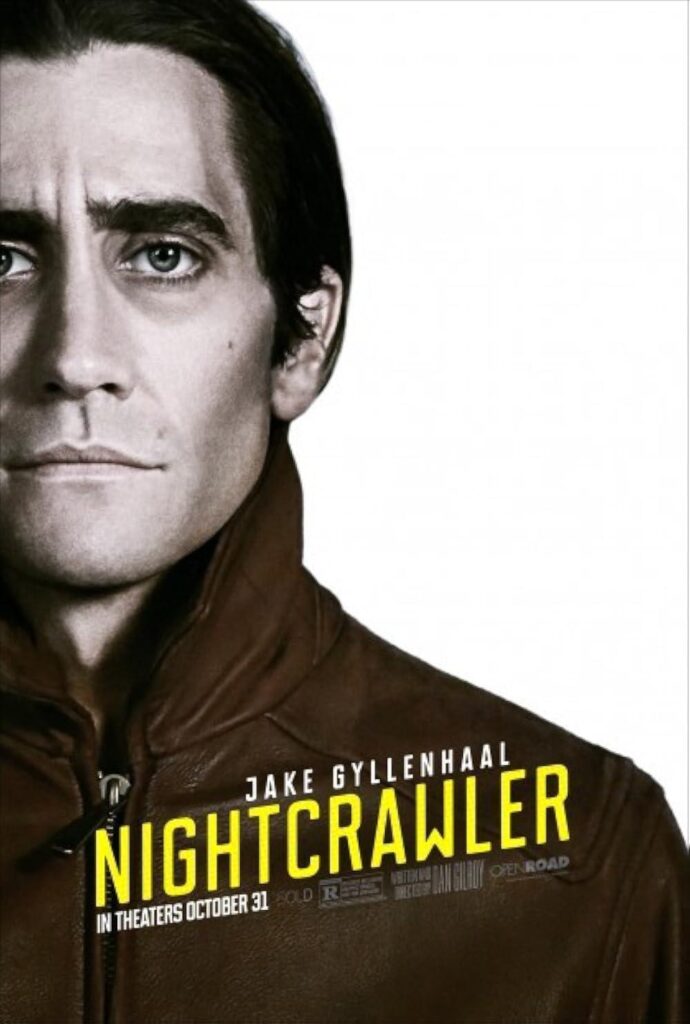
Nightcrawler is a 2014 American neo-noir psychological thriller film written and directed by Dan Gilroy. The film stars Jake Gyllenhaal as an ambitious but morally void freelance cameraman who records violent events in Los Angeles for local TV news. It is noted for its critique of sensationalist journalism and Gyllenhaal’s transformative performance.
Key facts
- Release date: October 31, 2014 (U.S.)
- Director: Dan Gilroy
- Starring: Jake Gyllenhaal, Rene Russo, Riz Ahmed, Bill Paxton
- Running time: 117 minutes
- Awards: Academy Award nomination for Best Original Screenplay
Plot and themes
Set in contemporary Los Angeles, the story follows Lou Bloom, an unemployed drifter who becomes a “stringer,” filming accidents and crimes to sell footage to TV news outlets. As Lou’s success grows, his ethical boundaries dissolve, leading him to manipulate and stage crime scenes for profit. The film explores themes of media exploitation, ambition, and moral decay in the pursuit of success.
Production and direction
Dan Gilroy made his directorial debut with Nightcrawler, which he also wrote. The production emphasizes realism, featuring extensive night shoots across Los Angeles. Cinematographer Robert Elswit used digital cameras to capture the city’s stark nocturnal landscape, creating a visually striking backdrop that mirrors the protagonist’s moral darkness.
Reception and legacy
Nightcrawler received critical acclaim for its screenplay, direction, and Gyllenhaal’s performance, often cited among the best of his career. Critics praised its sharp social commentary on crime journalism and the ethics of media consumption. The film has since become a modern cult favorite and a benchmark in contemporary thrillers for its tension and psychological depth.
Gone Girl
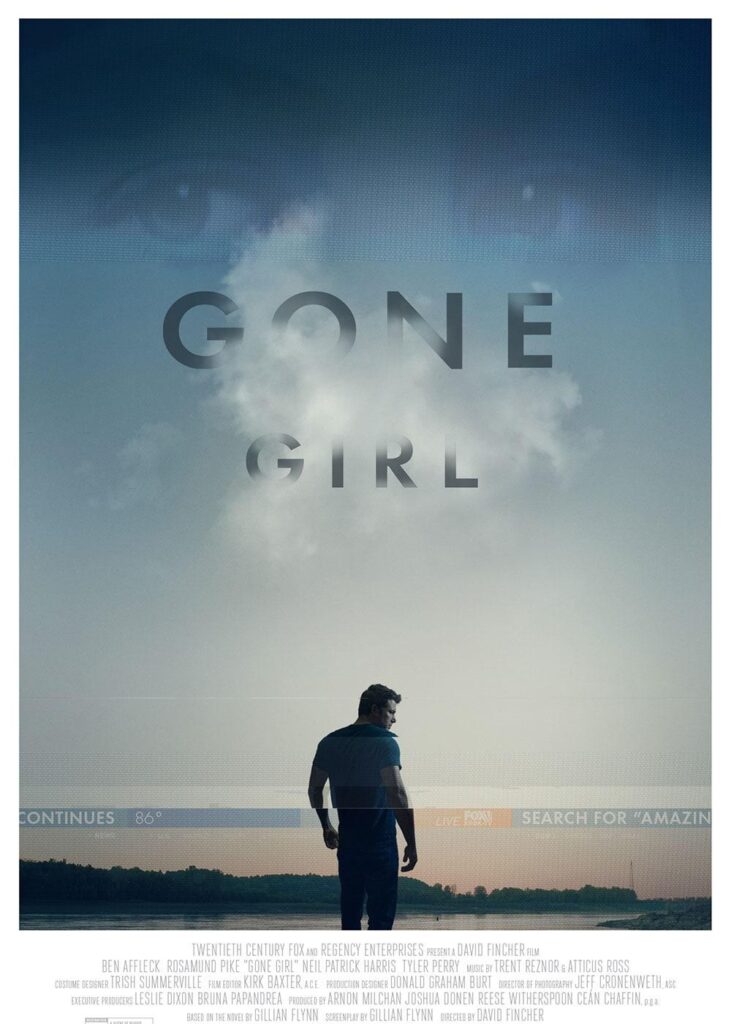
Gone Girl is a 2014 psychological thriller film directed by David Fincher and based on the 2012 novel by Gillian Flynn. The film explores marriage, media perception, and deceit through the mysterious disappearance of a woman and the subsequent scrutiny of her husband.
Key facts
- Release date: October 3, 2014
- Director: David Fincher
- Screenplay: Gillian Flynn
- Starring: Ben Affleck, Rosamund Pike, Neil Patrick Harris, Tyler Perry
- Box office: Over $369 million worldwide
Plot and themes
The story centers on Nick Dunne (Ben Affleck), whose wife Amy (Rosamund Pike) vanishes on their fifth wedding anniversary. As media attention grows, suspicion shifts toward Nick, revealing the dark complexities of their relationship. The film delves into manipulation, gender roles, and the performative nature of marriage, reflecting Flynn’s sharp commentary on contemporary relationships and tabloid culture.
Production and style
Fincher’s direction employs cold, meticulous visuals and precise pacing, typical of his filmmaking style. Flynn adapted her own novel for the screen, maintaining its unreliable narration and alternating perspectives. Cinematography by Jeff Cronenweth and the atmospheric score by Trent Reznor and Atticus Ross heighten the tension and emotional ambiguity.
Reception and impact
Gone Girl received widespread critical acclaim for its direction, screenplay, and performances—particularly Pike’s portrayal of Amy, which earned her nominations for an Academy Award for Best Actress, BAFTA Award for Best Actress in a Leading Role, and Golden Globe Award for Best Actress – Motion Picture Drama. The film was praised for its sharp social critique and became a major cultural talking point regarding truth, media spectacle, and domestic identity.
Legacy
Regarded as one of Fincher’s standout works of the 2010s, Gone Girl solidified Flynn’s reputation as a leading voice in modern thriller writing and exemplified the fusion of literary and cinematic storytelling in contemporary Hollywood.